
Asphalt is designed to handle regular vehicle traffic, changing weather, and everyday use, but it can develop problems over time. Small changes in the surface may eventually become larger pavement issues if they are not addressed.
Cracks, potholes, standing water, uneven areas, and surface deterioration are some of the most common problems found on asphalt driveways, parking lots, and other paved surfaces. The cause of the damage can vary depending on drainage, traffic, pavement age, installation, and maintenance.
Understanding the most common asphalt problems can help property owners recognize early warning signs and determine when asphalt repair or maintenance may be needed.
10 Most Common Asphalt Problems You May Notice
Asphalt can develop different types of surface and structural problems over time. Some are caused by water and weather, while others can result from traffic, pavement age, weak underlying materials, or installation issues.
1. Longitudinal and Transverse Cracking
Longitudinal cracks run along the direction of the pavement, while transverse cracks run across it. These cracks can develop because of temperature changes, pavement movement, aging, or problems within the pavement structure.
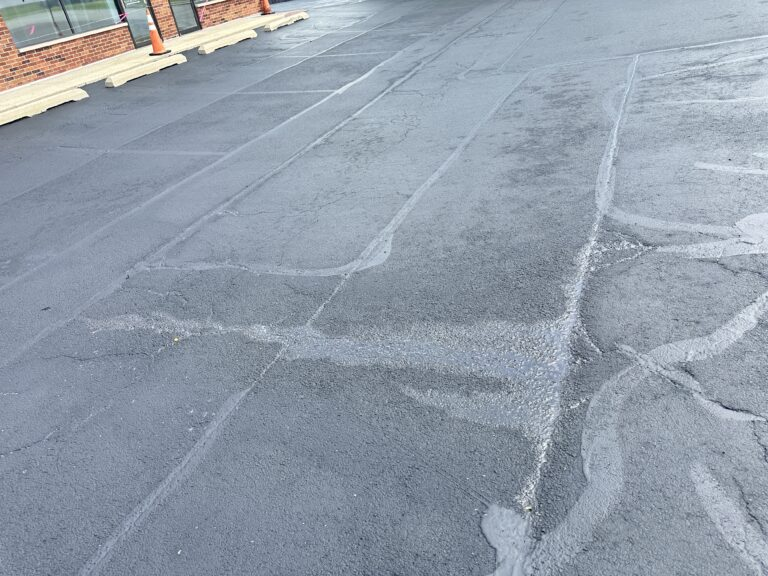
Small cracks may initially appear limited to the surface, but open cracks can allow water to enter the pavement and may require crack filling to limit further deterioration. If they continue to expand, they may contribute to more extensive deterioration.
2. Slippage Cracking
Slippage cracks are crescent-shaped cracks that can develop when the surface layer of asphalt moves or loses its bond with the layer underneath. They may occur in areas exposed to braking, turning, or repeated vehicle movement.
These cracks are different from typical linear pavement cracks because they can indicate a bonding or surface-layer problem. The appropriate repair depends on the cause and extent of the damage.
Know how weather affects asphalt driveways and parking lots.
3. Potholes
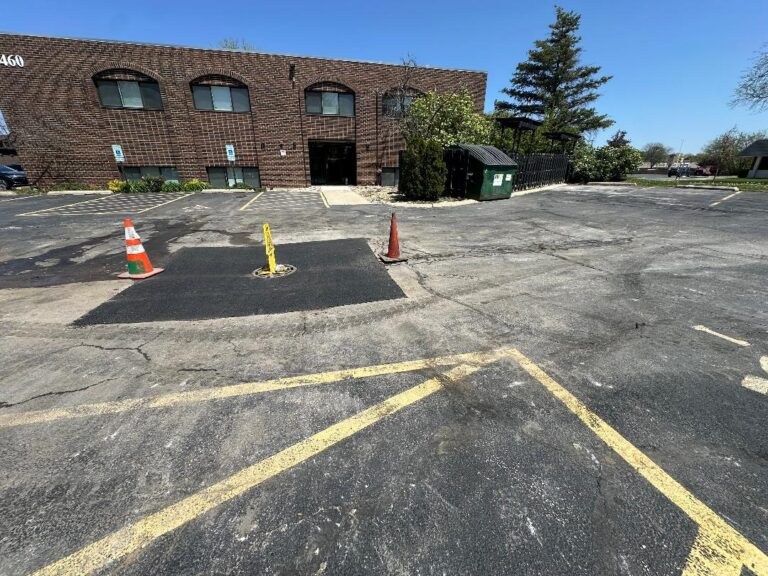
Potholes form when sections of asphalt deteriorate and break away from the surrounding pavement. Water entering cracks and weakened pavement can contribute to pothole formation, particularly when the pavement is exposed to repeated traffic and temperature changes.
Potholes can become larger as vehicles continue driving over them. They may also create uneven areas for vehicles and pedestrians.
Prompt pothole repair can help prevent localized damage from becoming a larger pavement problem.
4. Standing Water and Poor Drainage
Water should be able to move away from an asphalt surface through proper grading and drainage. When water remains on the pavement after rainfall, it can contribute to deterioration.
Standing water may occur because of:
- Poor grading
- Clogged drainage areas
- Depressed pavement
- Damaged catch basins
- Inadequate drainage
Repeated water exposure can weaken asphalt and contribute to cracks, potholes, and other surface problems. Addressing the drainage issues may be necessary along with repairing the damaged pavement.
5. Asphalt Raveling
Raveling occurs when the surface of the asphalt begins to lose its aggregate. You may notice loose stones or small pieces of pavement collecting on the surface.
This problem can develop as asphalt ages or when traffic, moisture, and other conditions weaken the bond between the asphalt binder and aggregate.
As traffic progresses, the pavement surface can become rougher and more susceptible to additional deterioration.
6. Alligator Cracking
Alligator cracking appears as a network of interconnected cracks that can resemble the pattern of an alligator’s skin.
Unlike isolated surface cracks, alligator cracking can indicate problems deeper within the pavement structure. Weak base materials, repeated heavy traffic, poor drainage, and long-term pavement deterioration can contribute to this type of cracking.
The appropriate asphalt repair depends on the extent and cause of the damage. Simply filling the visible cracks may not address underlying structural problems.
7. Depressions and Rutting
Depressions are areas where the pavement surface has settled below the surrounding asphalt. Rutting appears as longitudinal depressions that can develop along vehicle wheel paths.
These problems may result from repeated traffic, weak underlying materials, poor compaction, water-related issues, or pavement deterioration.
Depressed or rutted areas can collect water and create additional problems if they are not addressed. The underlying cause should be evaluated before determining the appropriate repair.
8. Faded or Damaged Parking Lot Markings
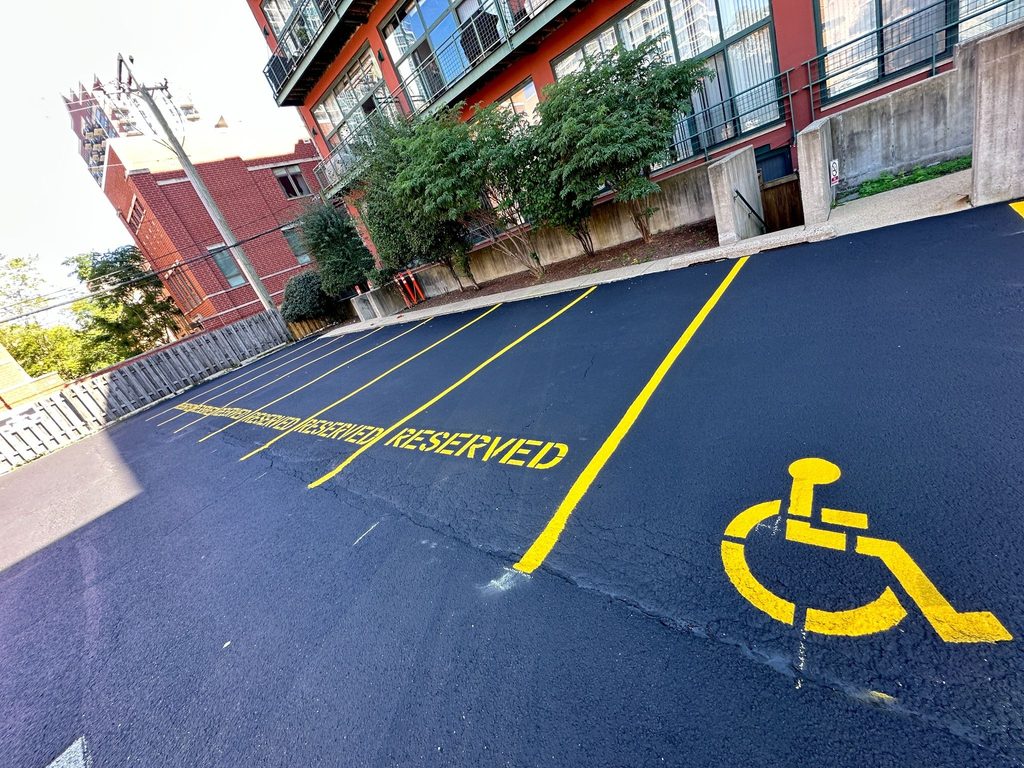
Parking lot markings can become difficult to see as a result of traffic, weather, sunlight, and general wear. Faded lines can make parking spaces, traffic lanes, accessible spaces, fire lanes, and other areas less clearly defined.
Parking lot striping can restore visibility and improve the organization of the property. Markings should also be reviewed whenever a parking lot is repaired or its layout changes.
9. Edge Cracking and Breaking
Asphalt edges can become cracked, broken, or weakened when they are exposed to vehicle traffic, water, poor drainage, or a lack of support.
Driveway edges and pavement along parking lot borders can be particularly vulnerable when vehicles regularly travel or park close to the edge.
Repairing damaged edges and addressing drainage or support problems can help prevent the deterioration from spreading into the main pavement area.
10. Faded or Oxidized Asphalt
New asphalt typically has a dark appearance, but exposure to sunlight, weather, and oxygen can gradually cause the surface to become lighter and more gray.
Color change alone does not necessarily mean the pavement has failed. However, faded asphalt can indicate that the surface has experienced long-term weathering and oxidation.
Depending on the pavement’s condition, maintenance such as sealcoating may be appropriate. Sealcoating is not a solution for every type of asphalt damage, so the condition of the pavement should be considered first.
What Causes Asphalt Problems?
Asphalt problems can have several causes, and more than one factor may contribute to the same type of damage. Water, traffic, weather, pavement age, and underlying conditions can all affect how asphalt performs over time.
Common causes include:
- Water infiltration
- Poor drainage
- Heavy vehicle traffic
- Freeze-thaw cycles
- Temperature changes
- Aging pavement
- Weak base materials
- Poor installation
- Insufficient maintenance
- Repeated surface repairs
These factors can contribute to cracks, potholes, rutting, raveling, and other forms of pavement deterioration. Identifying the cause is important because repairing only the visible damage may not prevent the problem from returning.
Understanding the cause is important because the correct repair depends on the type and extent of the damage.
Related Articles:
Asphalt Repair vs. Replacement: Which Option is Right for Your Property?
What Is Sealcoating and How Does It Protect Asphalt?
What Causes Potholes and How Can You Prevent Them?
How Can You Prevent Common Asphalt Problems?
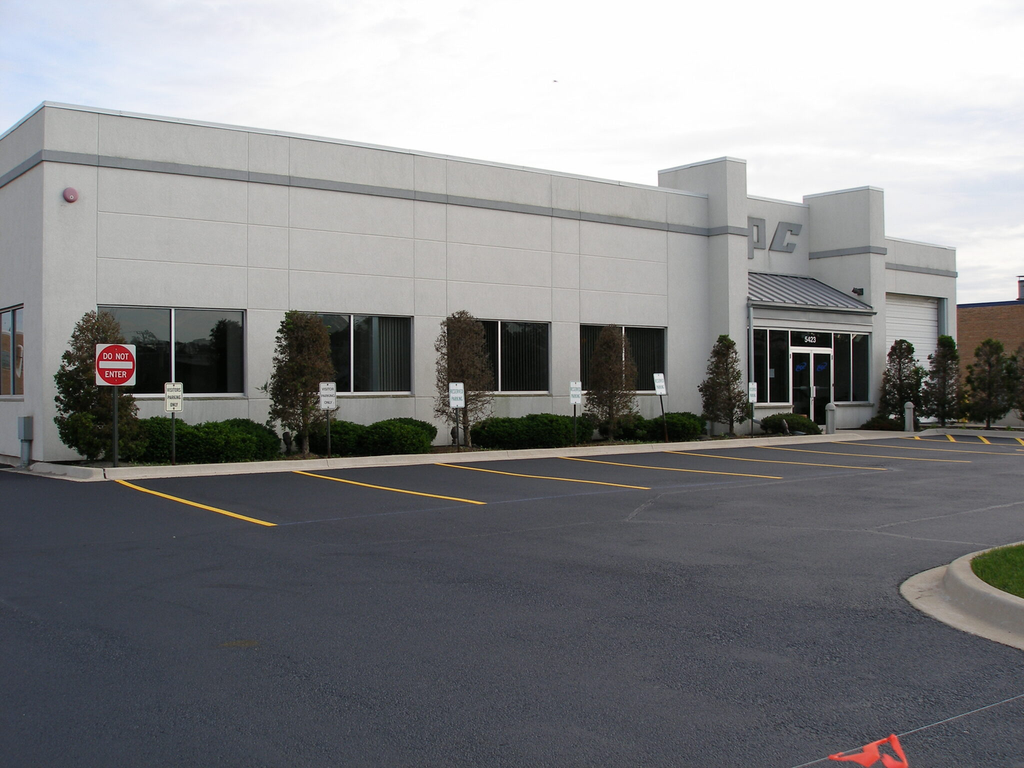
Regular maintenance can help property owners monitor pavement conditions and address smaller issues before they become more extensive.
Some useful maintenance practices include:
1. Inspect the Pavement Regularly
Walk or drive across the property periodically and look for new cracks, potholes, standing water, and areas that are becoming uneven.
2. Address Drainage Problems
Water is one of the major contributors to asphalt deterioration. Keep drainage areas clear and address standing water or drainage problems when they appear.
3. Repair Cracks Early
Open cracks can allow water to enter the pavement. Addressing suitable cracks early can help reduce further water infiltration.
4. Repair Potholes Promptly
Potholes generally do not improve on their own. Repairing them before they expand can help limit the affected area.
5. Maintain the Asphalt Surface
Maintenance such as sealcoating may be appropriate for asphalt that is in suitable condition. However, significant structural damage should be addressed before considering surface maintenance.
Have Asphalt Problems on Your Property?
Cracks, potholes, drainage issues, uneven pavement, and surface deterioration can affect both residential and commercial asphalt surfaces. Identifying the problem early can help property owners understand what type of work may be needed.
American Sealcoating Inc. provides asphalt paving, asphalt repair, crack filling, pothole repair, sealcoating, and pavement maintenance services for residential and commercial properties in the North and Northwest suburbs of Chicago.
If you have noticed cracks, potholes, standing water, or other asphalt problems, call/text 847-520-3114 or request a free estimate to discuss your pavement needs.